PELORA – Rethinking Sea Lice Control by Treating the Water
PELORA introduces a fundamentally different approach.
Instead of treating the fish, PELORA treats the water.
Sea lice and other biological stressors represent one of the most significant risks to fish welfare, production stability and economic performance in modern salmon farming. At the same time, the industry is moving toward larger cages, higher biomass per site and more exposed locations – developments that demand continuous, scalable and preventive solutions, rather than reactive treatments.
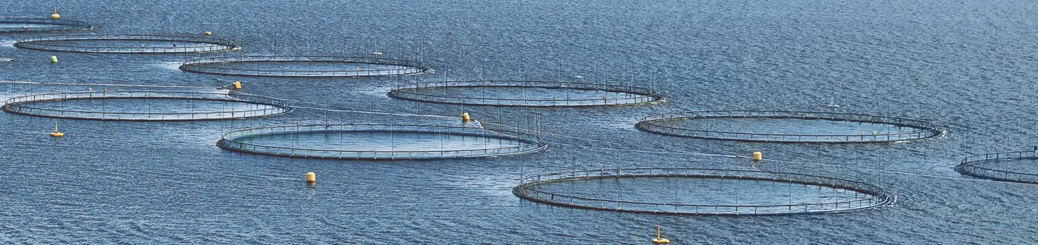
PELORA is a continuous water treatment system designed for installation in open sea cages. The system targets the biologically most relevant surface layers of the cage (typically 0–3 m depth), where infective stages of sea lice larvae are most prevalent. By applying controlled cavitation and rapid pressure transitions, PELORA physically inactivates free-swimming sea lice stages (nauplius and copepoditt) as the water circulates through the system.
The technology can be deployed preventively from day one, reducing infestation pressure before lice establish on the fish, or retrofitted into cages with existing lice challenges as a population-suppressing measure. In both cases, the objective is the same: to lower the continuous infection pressure in the cage environment and maintain stable, low lice levels throughout the production cycle.
Based on conservative biological and technical assumptions, PELORA is expected to inactivate ≥90 % of free-swimming sea lice larvae per pass. Even at this cautious level, continuous operation over time leads to a substantial cumulative reduction in infection pressure – effectively shifting lice control from episodic interventions to continuous risk management.
PELORA is dimensioned for representative Norwegian cage sizes (35, 60 and 90 m diameter) and offered in several standard capacity classes, covering most current and future open-cage installations.
From an economic perspective, PELORA is designed to be highly cost-effective. In practice, PELORA can be justified by avoiding a single delousing operation per year, or by reducing mortality by only 1–2 percentage points.
The use of cleaner fish is currently widespread but associated with significant cost, welfare concerns and biological uncertainty. PELORA has the potential to replace or substantially reduce the need for cleaner fish, a particularly important consideration given that Norwegian authorities have decided to phase out cleaner fish by 2028.
Beyond sea lice, PELORA may also reduce the risk of acute biological events such as string jellyfish (Apolemia uvaria) ingress, and contribute to a lower overall biological load in the water phase. This is considered biologically plausible and may have positive secondary effects on gill health and infection-related challenges.
PELORA is therefore not merely a delousing technology
It represents a new category of solution:
A continuous, preventive and water-based risk-reduction system for open-sea aquaculture.